Poznań, Poland
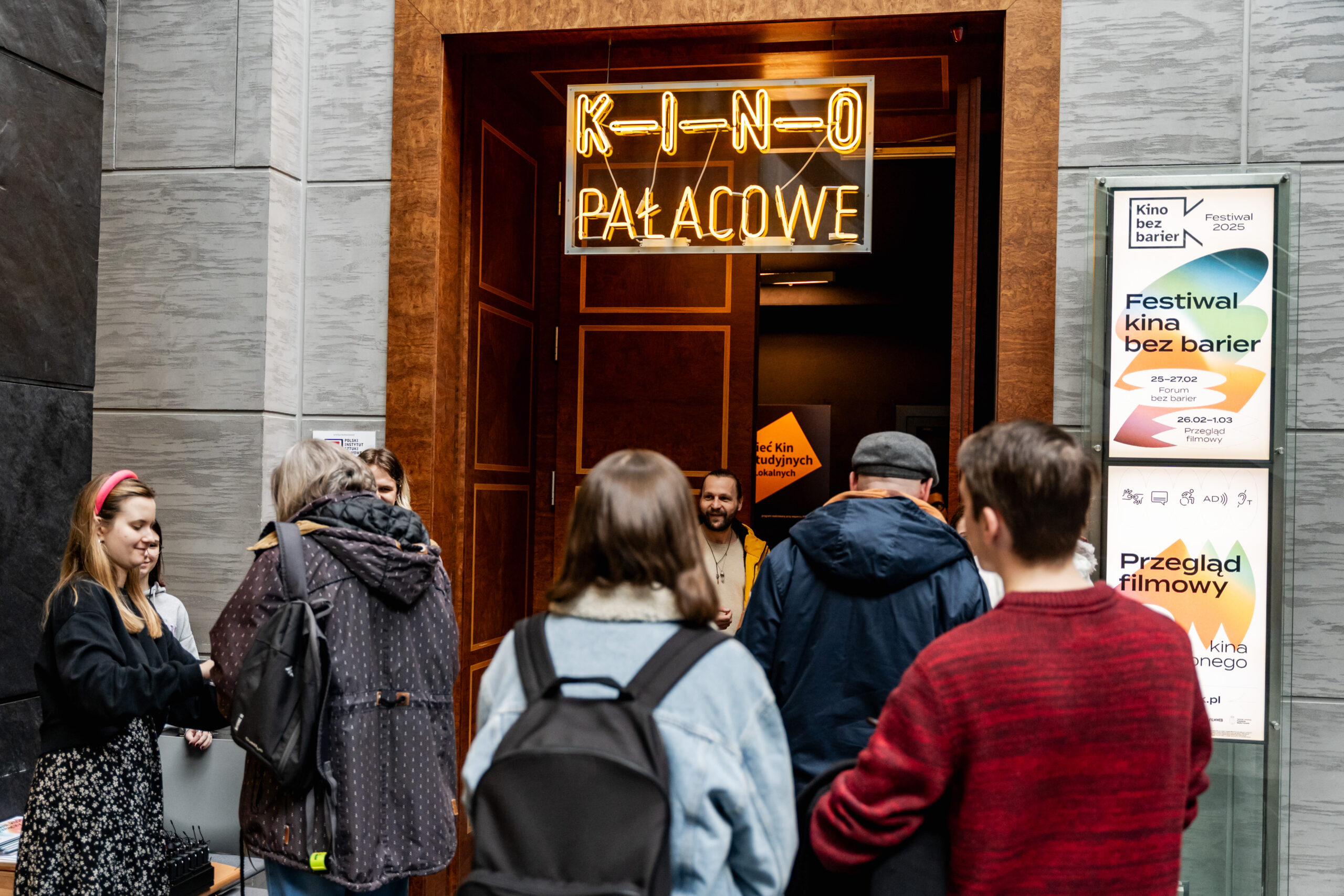
Kino Pałacowe is a key arthouse cinema situated in the east wing of the historic Imperial Castle in Poznań, a city of 500,000 in western Poland. Operating as part of the multidisciplinary cultural centre Centrum Kultury ZAMEK, the cinema was fully rebuilt between 2010 and 2012, reopening in 2013. What makes Kino Pałacowe’s approach to inclusivity unique is its organisational structure: its major inclusive programme, “Cinema Without Barriers” (launched in 2022), is driven by the Social Programmes Department rather than the film department alone. This collaboration allows the institution to focus deeply on the social and relational aspects of accessibility while utilising the cinema’s technical infrastructure.
Spaces
The venue operates two screening rooms: a small 48-seat hall (currently under renovation) and a main 139-seat hall that includes two dedicated spaces for wheelchair users. The main hall is equipped with modern facilities, including a 4K laser projector, 3D capability, and an induction loop. Because the cinema is housed within a historical castle, they also provide guided tours of the building – translated into Polish Sign Language and enhanced with audio description – to ensure the physical space feels safe, familiar, and welcoming to new audiences with disabilities.
Programming
Rather than limiting accessibility to special festivals, Kino Pałacowe has integrated it into their regular weekly repertoire. They host accessible screenings twice a week: Tuesdays feature audio description and SDH subtitles, while Thursdays feature Polish Sign Language interpretation. Often, the same film is screened on both days, allowing viewers to choose the format that suits them or even attend twice to process the film differently.
Their programming focuses on new arthouse releases, premieres, and European cinema so that audiences with disabilities can participate in current cultural conversations. They frequently program challenging themes – such as human rights, LGBTQ+ issues, and stories about refugees – to broaden perspectives, even when it occasionally challenges the more conservative viewpoints of their older audiences. Furthermore, they intentionally avoid screening thrillers and horrors (which rely too heavily on sound and music for d/Deaf audiences) and are careful with language-based comedies.
Communication
Kino Pałacowe completely erased its traditional promotional methods when starting its inclusion efforts, recognising that standard social media posts do not effectively reach historically excluded groups. Instead, their strategy centres on building relationships and trust. Staff members personally welcome guests at screenings, serving as the trusted “faces” of the project.
All digital communication adheres to accessibility standards, using simple language, visual symbols (like SL icons), alternative text, and screen-reader-friendly formats. However, despite digital trends, the cinema discovered that printed brochures remain their most effective tool – particularly for their senior audience base. These brochures provide the monthly schedule alongside detailed content warnings for sensitive topics (like nudity, violence, or drug abuse).
Services
To overcome the massive barrier of economic exclusion, Kino Pałacowe offers highly subsidised tickets. Rather than making screenings free – which denies viewers the dignity of being regular, paying customers – they charge a nominal fee (historically 5 PLN, moving to 10 PLN, which is roughly €1-2). The cinema also recently initiated a voluntary assistance programme to provide direct support for viewers with different needs.
Organisational Approach
Before 2022, the cinema outsourced its accessible screenings to an external foundation. The staff soon realised this prevented them from building internal knowledge and direct relationships with their audience. By bringing the operations entirely in-house, they embedded accessibility into the “soul of the institution”.
Audience building at Kino Pałacowe always begins with qualitative research, including focus groups, observation, and interviews, to ensure their initiatives are grounded in real needs. They invest heavily in employee development, running extensive staff workshops and sharing their findings through open-access toolkits. They also lead broader industry change by organising the “Forum Without Barriers,” a recurring national conference for film and accessibility professionals.
Cinema-to-Cinema Advice
- There is no meaningful inclusion without real relationships. Meet with local association leaders for coffee, ask questions, and build trust over time rather than just reaching out when you want to sell tickets.
- You do not need a massive budget to begin. Many film distributors already have audio description or subtitles available if you simply ask. Even small steps, like bringing in an interpreter for a Q&A, make a huge difference.
- Accessibility is never “finished”. Language will change, technology will evolve, and you will make mistakes. The goal is to stay open, listen to your viewers, and continuously update your practices.
