Košice, Slovakia
Kino Úsmev is an arthouse cinema located in the city centre of Košice, operating under the management of the civic association CINEFIL since 2019. Although the cinema officially dates back over a century to its founding in 1922, its modern iteration was born from a motivation to revive the venue and establish a prominent audiovisual culture centre in eastern Slovakia. Dedicated to European arthouse cinema, film production, research, and education, it stands out as the only functioning traditional cinema in the city, distinguishing itself from local multiplexes.
Spaces
The cinema operates two screening halls, alongside a popular café and bar that serve as a vital community hub. Kino Úsmev rents its premises from the city for a symbolic annual fee; in return, the organisation has committed to a 10-year contract to gradually reconstruct and modernise the historic space using the revenue generated from their activities. Recognising that the current building presents physical barriers for marginalised groups, the venue is actively working to improve its overall spatial accessibility.
Programming
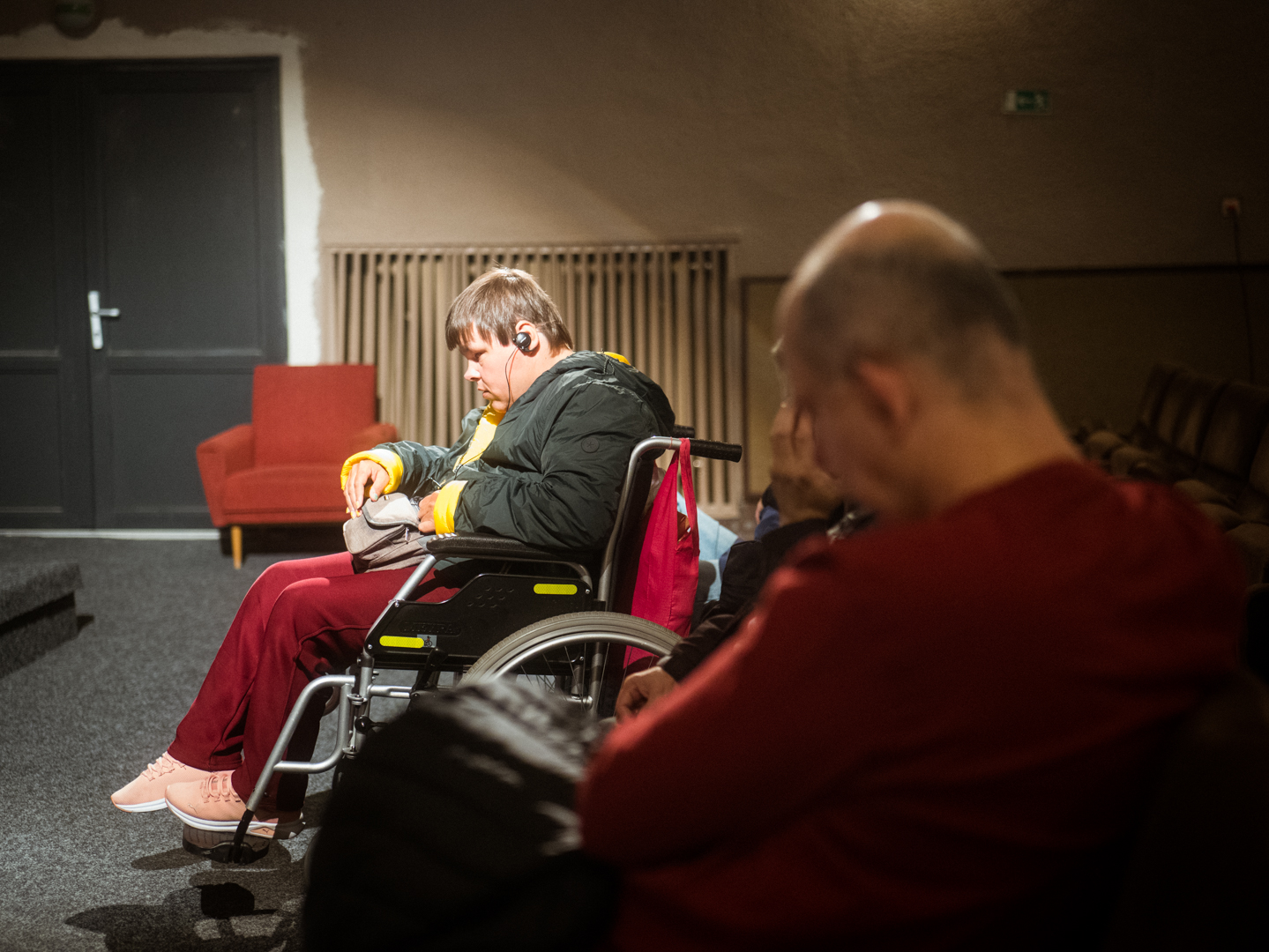
While the core of Kino Úsmev’s programme consists of European arthouse films, they heavily integrate cultural events and a strong gastronomic offer to attract visitors. Around 2019, the cinema began explicitly addressing accessibility by introducing autism-friendly and dementia-friendly screenings, later expanding to include blind, deaf, senior and baby-friendly cycles. A key philosophical goal of this programming is to intentionally mix the general audience with historically marginalised groups during these accessible screenings. Additionally, the cinema adapts to changing audience needs; for example, post-COVID feedback revealed a strong preference for positive, entertaining films over heavy, negative subjects, which the cinema has integrated into its scheduling.
Communication
While Kino Úsmev utilises standard digital channels like their website, Facebook, Instagram, and LinkedIn, they have found that word-of-mouth and personal relationships within the “friends of Kino Úsmev” community are their most powerful communication tools. For specific demographics, they rely on highly direct communication. For instance, staff communicate directly with the Senior Council of the City of Košice to ask what older audiences want to see, which translates directly into regular attendance.
Services
To combat economic exclusion, Kino Úsmev implements strict financial de-barrierisation. Even standard tickets are kept affordable at €7, but tickets for their inclusive screenings are heavily subsidised to just €3 (and in the past, were sometimes offered for free or at a nominal cost) to ensure that historically marginalised groups are not priced out of the cultural experience.
Organisational Approach
Since 2016, Kino Úsmev has successfully built a reputation as a “safe space” for various communities, particularly young adults (aged 25 – 45) and seniors (60+). The organisation champions “participatory programming,” regularly conducting ad-hoc qualitative research and focus groups to allow audiences to directly influence the cinema’s direction. They have also conducted specific research on the cinema habits of visually impaired audiences in Košice.
Currently, their strategic focus is expanding from local inclusivity to national and international advocacy. They led international projects Kósy Kino and IncluCine, scaling accessibility beyond borders to Iceland, and Czechia. In April, Kino Úsmev hosted a 5-day pilot training programme for 14 European cinema operators to deeply explore accessibility practices. They are also behind the international platform “Caring Cinema” to share best practices, case studies, and a searchable database of accessible screenings across Europe.
Cinema-to-Cinema Advice
- It is critical to assemble a good team that is completely united by a clear mission, vision, and shared goals, as this will heavily dictate the cinema’s development and direction.
- Do not try to build an audience entirely from scratch. Partner with local organisations that already have established communities, making the process of audience building much easier and more organic.
- Avoid trying to do everything everywhere all at once, which often leads to compromised quality. Begin with one specific initiative, dedicate yourself to doing it well, and only build upon it once it has proven successful.
