These screenings are specifically designed for people with hearing impairment, including d/Deaf and hard-of-hearing viewers. These events feature special technical adjustments, such as closed captions and induction loops.
Spaces
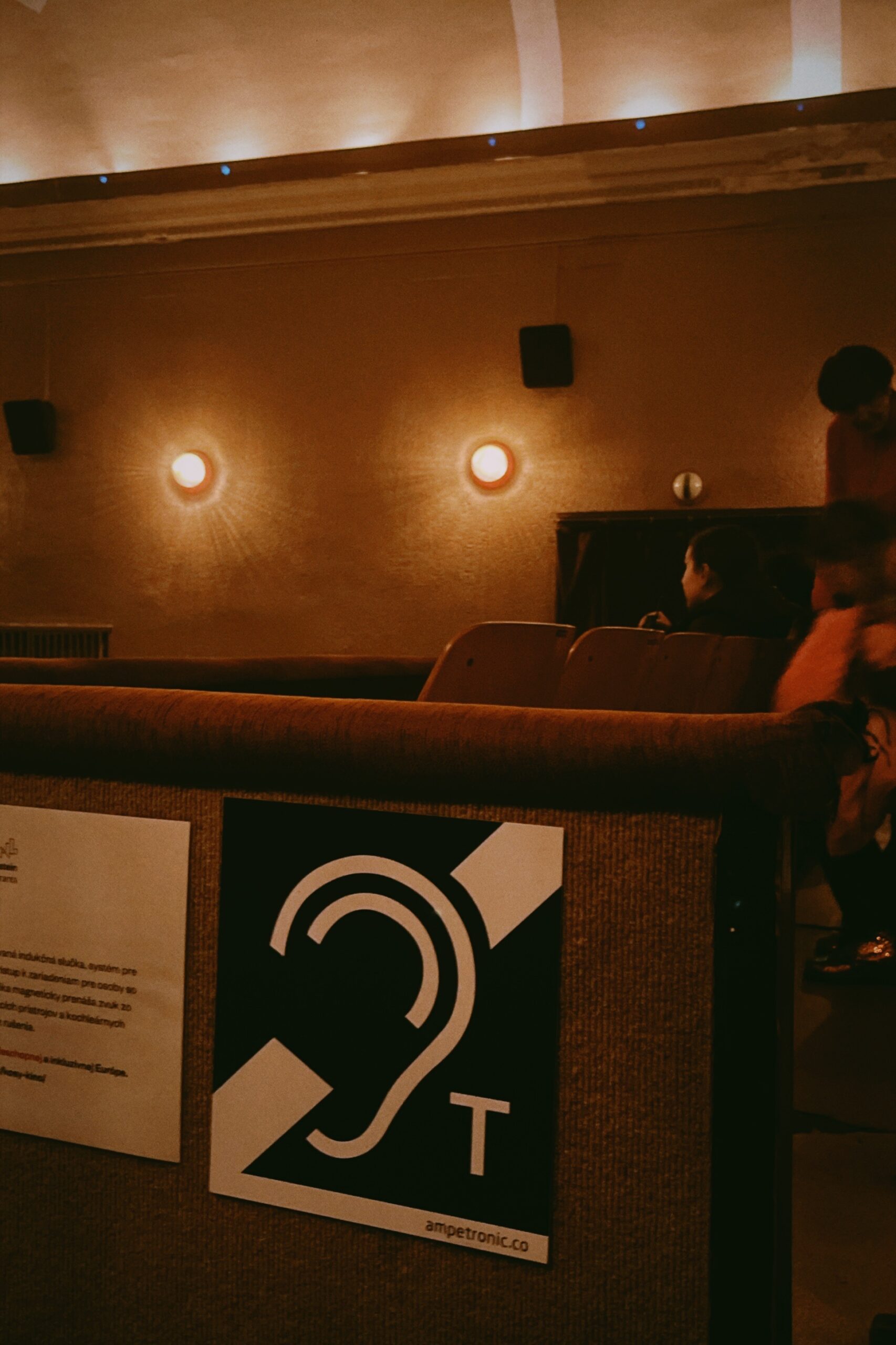
Install an induction loop in the cinema to transmit sound directly into hearing aids or cochlear implants, and mark the area clearly with the standard induction loop symbol. Ensure there are clear, contrasting signs pointing to the cinema entrance, exits, and toilets. Ensure closed captions are placed correctly. Avoid 3D screenings, which make reading captions difficult.
Communication
Upon arrival, tell visitors where the induction loop is located and remind them to switch their hearing aids to the “T” (T-Coil) position to hear the audio. Always communicate face-to-face so guests can read lips if need be, taking care to articulate well and speak loudly enough. Translate screening invitations into national sign language, and be prepared to communicate via written text in case of emergencies. Ensure your website is fully accessible so visitors can easily find information.
Programming
Screenings must include closed captions that transcribe the audio dialogue and background noises. They may use use color-coding to distinguish between different characters. Publish the screening schedule at least two weeks in advance. Do not play any commercial advertisements or trailers before the movie begins.
Services
Staff should be trained to handle technical failures. For example, if the captions fail to appear, they should restart the film from the beginning rather than turning them on late. Front of house staff should ideally be trained in Deaf awareness and know basic sign language phrases to smoothly assist visitors with buying tickets and snacks.