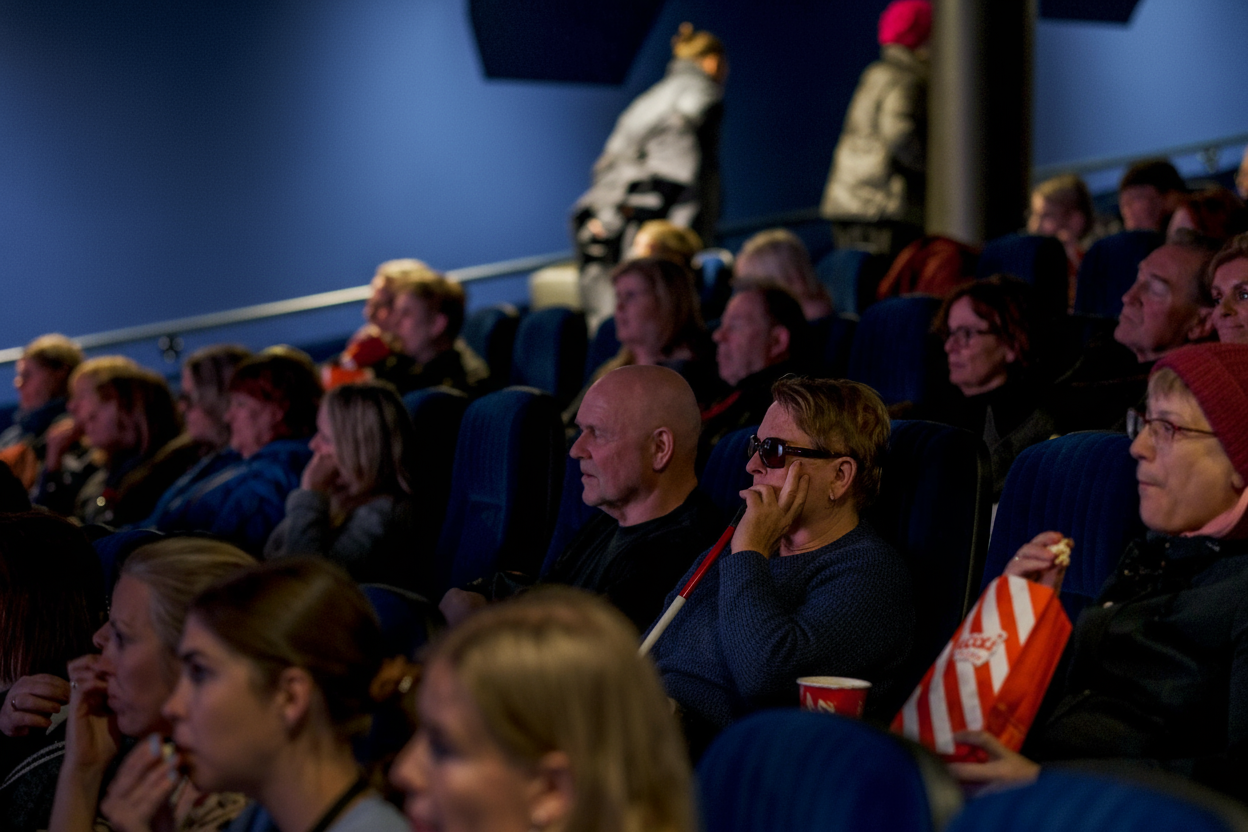
Blind-friendly screenings are designed specifically for blind and visually impaired audiences. The films are accompanied by an audio description that describes the plot, scenes, environment, actors, and their facial expressions or gestures in detail.
Spaces
Provide clear, high-contrast signs for the cinema entrance, exits, and toilets, ideally including Braille. Ensure the areas leading to the cinema hall are well-lit. Mark spatial obstacles like stairs, tables, and doors with contrasting colours, provide handrails on the sides of stairs, and ensure the space is barrier-free, such as by providing an elevator. The venue should be dog-friendly so that guests can bring their guide dogs. Provide headphones for the audio description to visitors upon entering the cinema hall, or play the audio description aloud for the audience.
Communication
Ensure your website is fully accessible so visually impaired visitors can easily navigate it.
Programming
Publish the screening schedule at least two weeks in advance. It is recommended to start the screening way before dusk so visitors have enough time to safely travel home after the film ends. Select films with a shorter runtime and rich dialogue to make following the plot easier for the audience. Before the film starts, play an audio recording or jingle to announce to the audience that the film is accompanied by audio description. Do not play any commercial advertisements or trailers before the film begins.
Services
Employees should be informed, trained, and prepared to assist visitors if they need advice or physical assistance.